Switched On! Ideas, Developments, Solutions from K E Brown

June 2010

Thermal imaging program can
eliminate fire hazards invisible
to the naked eye

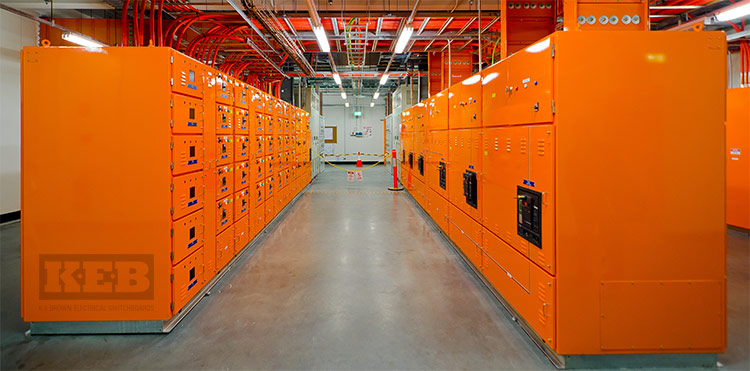
A scanning program that uses thermographic camera technology to detect hotspots on low voltage switchboard equipment before they develop into faults, fire or explosion is being offered by K E Brown Electrical Switchboards.

The hotspots - which are invisible to the naked eye - potentially pose a serious business risk that can be avoided by a KEB Active Thermographic Program as part of a company's low voltage switchboard maintenance regime.

The data gathered in such a programme is compiled into a report detailing prioritised remedial works recommendations, says KEB Service Manager Grant Perry, who has compiled an outline of the service on www.keb.com.au/thermal.

Establishing an Active Thermographic Program can help save companies time and money by helping to eliminate safety hazards, unexpected equipment outages,
business disruptions and costly repairs, he says.

Thermographic scanning of electrical switchboards does not require a shutdown and involves non-intrusive inspection of company switchboards without any impact on site operations.

"Awareness of the benefits of thermographic scanning of low voltage switchboards has increased greatly in recent times," says Mr Perry. "Many KEB clients opt for a combination of thermographic scanning together with a Switchboard Inspection and Audit Report to give an accurate assessment of their switchboards' overall condition."

Thermographic Scan Report

KEB provides a written colour-imaged KEB Active Thermographic Program Report detailing the equipment inspected, any faults found, severity of the faults identified (based on the operating temperatures detected) and recommendations on any corrective actions.

The data is summarised and any rectification recommendations are prioritised, giving the building manager a clear understanding of the condition of the switchboard.

Thermal Imaging

Thermal Imaging

Early detection of any hotspots allows for scheduled rectification works to be carried out in a prioritised manner taking into account the severity of the fault detected.

Typically faults are indicated with a full thermal image as Picture in Picture (PIP) of the standard photographic image, detailing the nature of the fault and the operating temperatures at the time of inspection.

Interpretation of the data requires expertise and experience. In the case of a KEB Active Thermographic Program, this is provided by a thermographer who is not only Cert 1 Qualified by an external qualifying authority, but also an experienced switchboard tradesperson with a wealth of knowledge in low voltage switchboard design and an understanding of specific AS and SA requirements relating to LV switchboards.

KEB thermographers are also highly experienced in switchboard equipment, switchboard remedial works, switchboard maintenance works and shutdown planning logistics.